
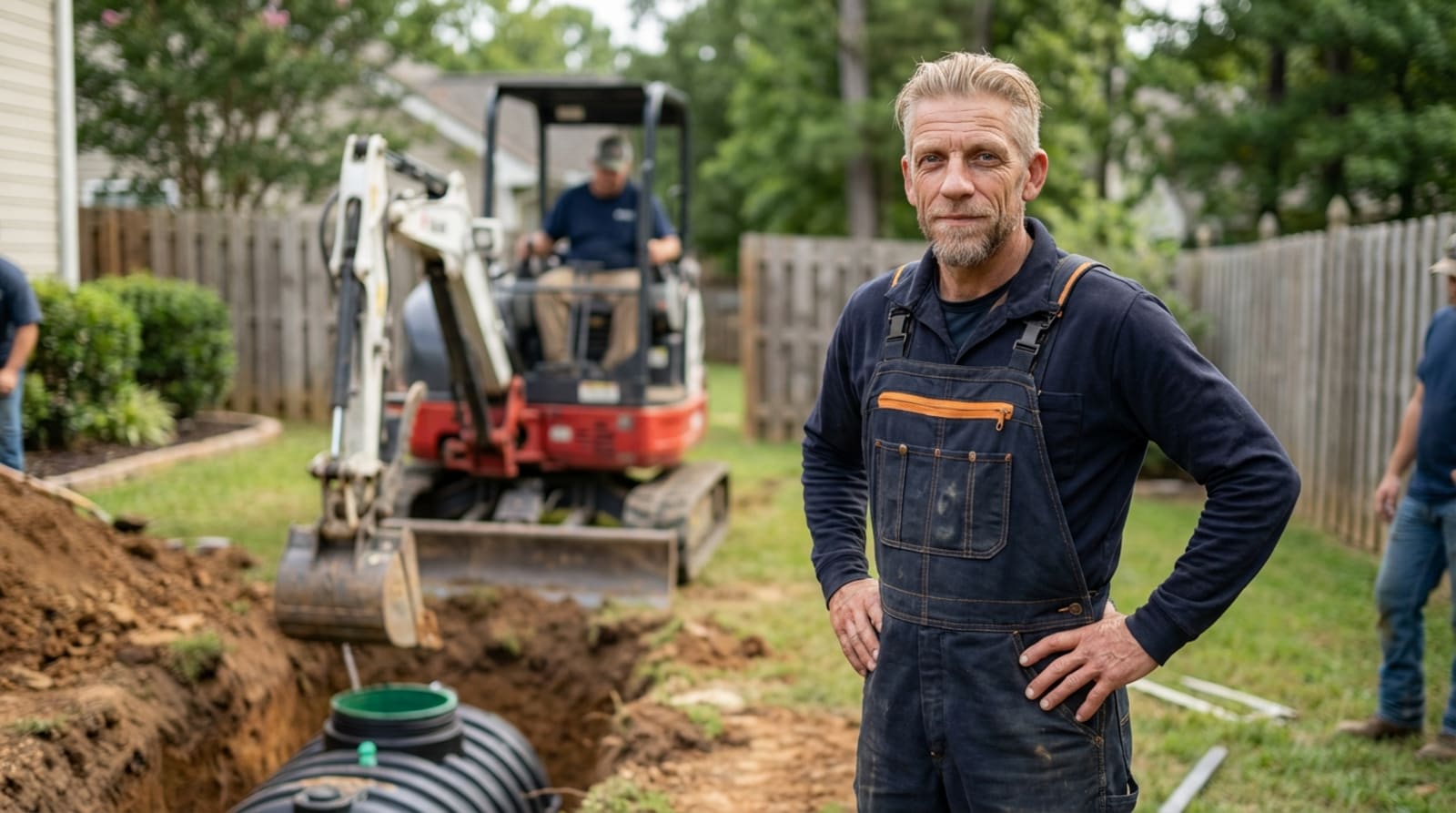
When Is Septic Tank Replacement Necessary?
Septic tank replacement in Chattanooga TN is necessary when your existing tank has structurally failed, no longer meets code, or cannot support your household’s wastewater demand. While some issues can be repaired, aging concrete tanks, rusted steel tanks, and collapsed baffles often require full system replacement to protect your home and property.
If your septic tank is over 35–40 years old, showing structural cracks, causing repeated sewage backups, or failing inspection in Hamilton County, replacement is usually the safest and most cost‑effective long‑term solution. A new, properly sized system installed by licensed DOEC contractors protects your home’s plumbing, prevents groundwater contamination, and restores dependable wastewater treatment for decades. Chattanooga Septic Tank handles soil testing, permitting, design, excavation, installation, and final inspection—so you get a fully compliant system built specifically for local soil conditions and Tennessee regulations.
Our team provides septic tank services Chattanooga TN homeowners rely on for honest assessments. If repair is possible, we’ll tell you. If replacement is the smarter investment, we’ll walk you through every step.
What Are the Signs Your Septic Tank Is Failing?
You may need septic tank replacement if you notice:
- Frequent sewage backups into toilets or tubs
- Persistent foul odors near the tank or drain field
- Soggy or unusually green patches in your yard
- Slow drains throughout the home
- A failed real estate or DOEC inspection
- A tank made of outdated steel or severely deteriorated concrete
Homes in Signal Mountain, Hixson, East Brainerd, and Soddy-Daisy often face additional stress from clay-heavy soils and seasonal rainfall. These local conditions can accelerate drain field saturation and tank deterioration.
If you’re unsure whether repair or replacement is needed, explore our full range of Our Services or visit the Septic FAQ for common system concerns.
How Does Septic Tank Replacement Work in Chattanooga TN?
Septic tank replacement involves more than swapping out a container. Tennessee Department of Environment and Conservation (TDEC, formerly DOEC) regulations require proper soil evaluation, system sizing, and inspection.
Here’s how our process works:
1. Site Evaluation & Soil Testing
We evaluate your existing system, confirm failure points, and conduct soil analysis if required. Soil type directly affects drain field design and tank size.
2. System Design & Sizing
Our Septic Design Experts design a code-compliant system based on bedrooms, occupancy, and percolation rates. Proper sizing prevents overload and early failure.
3. Permit Handling
We manage all documentation through our Septic Tank Permit Assistance service, coordinating approvals with Hamilton County authorities.
4. Excavation & Removal
The old tank is safely excavated and removed or decommissioned according to code. We protect surrounding structures and utilities during this phase.
5. New Tank Installation
We install high-quality concrete or approved alternative tanks rated for long-term durability. Need a brand-new system for a build? See New Construction Septic Systems.
6. Drain Field Installation
If the drain field has failed, we install new lines or alternative systems designed for Chattanooga’s soil conditions.
7. Final Inspection & Activation
Before backfilling, the system is inspected and tested to ensure compliance and performance.
For a full overview, visit How it works.
How Much Does Septic Tank Replacement Cost in Chattanooga?
In Hamilton County, septic tank replacement typically ranges from $4,000 to $12,000+, depending on:
- Tank size (750–1,500+ gallons)
- Drain field replacement needs
- Soil conditions and excavation depth
- Property accessibility
- Permit and inspection requirements
- System upgrades or alternative designs
Homes near waterways or with high water tables may require engineered solutions, which increase cost but ensure compliance and longevity.
We provide detailed written estimates so you understand exactly what you’re paying for. You can also request pricing directly through our Get an Estimate page.
How Long Does Replacement Take?
Most septic tank replacements in Chattanooga TN take 3–5 days once permits are approved. Weather, soil saturation, and inspection scheduling can affect timelines.
We coordinate closely with homeowners to minimize plumbing downtime. In many cases, water use is only restricted during critical installation phases.
Why Hire Licensed DOEC Contractors?
Septic replacement is regulated work. Hiring licensed professionals ensures:
- Compliance with TDEC regulations
- Proper soil testing and system sizing
- Approved materials and installation methods
- Successful inspection and property record updates
Chattanooga Septic Tank is a locally trusted provider of septic tank services Chattanooga TN residents depend on. Learn more about our experience and commitment on our About Chattanooga Septic page or visit our Homepage for an overview of all services.
We understand regional soil profiles, groundwater behavior, and subdivision-specific requirements across our Service Areas.
Repair or Full Replacement: Which Is Better?
If your tank has minor cracks or isolated component failure, repair may extend its life. However, full replacement is usually recommended when:
- The tank is structurally compromised
- The system repeatedly backs up
- The drain field has failed
- The tank is undersized for the home
- A home sale requires system compliance
If you’re already considering Septic Tank Installation in Chattanooga, TN, replacement may provide better long-term value than repeated short-term fixes.
Protect Your Property for the Next 40+ Years
A properly installed septic system can last 40–50 years with routine pumping and maintenance. Replacement is a significant investment—but when done correctly, it restores reliability, protects property value, and prevents costly environmental damage.
If your system is aging or showing warning signs, don’t wait for a complete failure. Contact Chattanooga Septic Tank today to schedule an inspection and get clear answers about your options.